

100 Essential Chinese Survival Phrases With Pinyin
You have found the restaurant, picked something from the menu, and worked out how to ask for it. Then the person behind the counter asks a question you did not expect. A useful Chinese phrase at that moment might be “Can you say that again?” or “Can you show me?”, and having it ready can make the whole exchange much easier.
These 100 essential Chinese survival phrases are for those ordinary moments: choosing lunch, paying for something, finding the bathroom, meeting a friend, or asking for help. They are practical Mandarin phrases for beginners and travelers, with pinyin, English meanings, and pronunciation buttons. Every phrase has Simplified Chinese on the first row and a smaller Traditional Chinese row underneath, so you can also recognize the writing you will see in Taiwan.
Our 100 Essential Chinese Phrases for Real Life video takes you through the same list in a roughly 16-minute animated lesson. Each phrase is spoken in Mandarin, explained in English, and repeated in Mandarin. Watch it once to hear the rhythm of the sentences, then use the phrasebook below to find the ones you need.
Which Chinese survival phrases should you learn first?
Start with the phrases that help you keep a conversation going. You can learn the name of a dish before entering a restaurant, but you cannot predict every question the staff will ask. Being able to request a slower repeat or a written answer gives you a way to continue when your prepared sentence runs out.
For a first outing, save these ten. Each link takes you to the complete Chinese phrase, its pinyin, and pronunciation:
- 5. Thanks.
- 6. Excuse me. Sorry.
- 13. I don’t understand what you’re saying.
- 15. Can you speak more slowly?
- 16. Can you say that again?
- 20. Can you write it down?
- 31. I want this one.
- 52. How much is this?
- 76. Where’s the bathroom?
- 97. Can you help me?
Choose another few around your own plans. If you are meeting a friend, practise “I’ve arrived” and “Send me your location.” If you are going out for dinner, prepare the phrases for ordering, checking ingredients, and paying. You will have a more useful first set if you can picture when you would actually say each sentence.
There is also a practical reason to keep the Chinese characters on your phone. Someone may understand a written destination or request even when your pronunciation needs work. You can say the phrase, point to the text, and listen to the reply. That gives both of you more to work with than a pinyin line alone.
The full list: 100 essential Chinese survival phrases
The list follows the video’s ten situations, and the numbers match throughout. Use the situation links to jump straight to food, directions, or payment. You can also search by an English word, Chinese characters, or pinyin; typing “card” or “bathroom” is enough to find the relevant phrase.
English meanings describe how the phrases work in conversation. A short Chinese reply may have several possible translations, so take the situation into account. 可以, for example, can be an easy “sure” when someone asks whether an arrangement works. It can also be part of a question about whether something is allowed.
Use the pronunciation buttons for a quick reminder, and return to the video when you want to hear each phrase in the recorded lesson. The buttons use the Mandarin voice available on your device.
No matching phrases. Try another word or show all situations.
Everyday replies and politeness
These are the replies you can use when someone offers you something, asks whether a plan works, or helps you out. You will not need a full sentence every time. A short answer and a thank-you often do the job.
- 可以。可以。Sure. That works.
- 不行。不行。That won't work.
- 好。好。Okay.
- 行。行。Okay. Deal.
- 谢谢。謝謝。Thanks.
- 不好意思。不好意思。Excuse me. Sorry.
Useful to know: A polite way to interrupt or apologise.
- 没事。沒事。No worries.
- 不用。不用。No need. No thanks.
Useful to know: A short, natural way to decline.
- 没问题。沒問題。No problem.
- 等一下。等一下。Wait a second.
When you do not understand
Keep these within easy reach. There is a difference between not understanding the words and not hearing them clearly, and the phrases below let you explain either problem. Asking for a slower repeat is more useful than pretending you followed the answer.
- 我知道了。我知道了。Got it.
- 我不知道。我不知道。I don't know.
- 我听不懂。我聽不懂。I don't understand what you're saying.
Useful to know: Use this when the words are not making sense.
- 我没听清楚。我沒聽清楚。I didn't hear clearly.
Useful to know: Use this when you did not hear clearly.
- 你能说慢一点吗?你能說慢一點嗎?Can you speak more slowly?
- 你能再说一遍吗?你能再說一遍嗎?Can you say that again?
- 什么意思?什麼意思?What does that mean?
- 你说什么?你說什麼?What did you say?
Useful to know: This can sound blunt. The longer repeat request is softer.
- 这个怎么说?這個怎麼說?How do you say this?
- 你能写下来吗?你能寫下來嗎?Can you write it down?
Explaining yourself and checking
You can say that you only speak a little Chinese, ask someone to show you, or check that you have picked the right thing. Pointing at a menu, ticket, or screen gives the other person something concrete to work with.
- 我的中文不太好。我的中文不太好。My Chinese isn't very good.
- 我只会说一点中文。我只會說一點中文。I only speak a little Chinese.
- 你会说英语吗?你會說英語嗎?Do you speak English?
- 你能给我看一下吗?你能給我看一下嗎?Can you show me?
- 这样对吗?這樣對嗎?Is this right?
- 是这个吗?是這個嗎?Is it this one?
- 对。對。That's correct.
- 不是。不是。That's not it.
Useful to know: Use it to reject an identification or statement.
- 真的?真的?Really?
- 怎么了?怎麼了?What's wrong?
Choosing and asking for things
At a shop counter, pointing and saying “this one” can be enough to start. These phrases help you accept, decline, ask what is available, and leave a choice to someone else. The surrounding situation supplies much of what a longer sentence would spell out.
- 我要这个。我要這個。I want this one.
Useful to know: Point to the item as you say 这个.
- 我不要这个。我不要這個。I don't want this.
- 我想要这个。我想要這個。I'd like this.
Useful to know: 我想要 sounds a little softer than 我要.
- 有没有这个?有沒有這個?Do you have this?
- 还有吗?還有嗎?Is there any more?
- 还有别的吗?還有別的嗎?Any other ones?
- 都可以。都可以。Either is fine.
- 随便。隨便。I don't mind.
Useful to know: Casual: best when an easygoing reply fits.
- 这个可以吗?這個可以嗎?Is this okay?
- 可以这样吗?可以這樣嗎?Can we do it like this?
More, less, bigger, slower
You have chosen what you want, but one detail needs changing. Use these for quantities, sizes, speed, and price. A bare “faster” can sound abrupt, so pay attention to whom you are speaking to and add a polite opening when it fits.
- 多一点。多一點。A little more.
- 少一点。少一點。A little less.
- 大一点。大一點。A little bigger.
- 小一点。小一點。A little smaller.
- 快一点。快一點。A little faster.
Useful to know: A direct request; soften it with 请 when appropriate.
- 慢一点。慢一點。A little slower.
- 够了。夠了。That's enough.
- 太多了。太多了。That's too much.
- 太贵了。太貴了。That's too expensive.
- 便宜一点可以吗?便宜一點可以嗎?Can you make it a little cheaper?
Useful to know: Use when bargaining is appropriate.
Shopping, prices, and payment
Ask for a price, say you are just looking, or check how you can pay. Asking whether a payment method is accepted is useful wherever you are. It does not assume that every shop accepts cards, cash, or the same mobile payment app.
- 多少钱?多少錢?How much?
- 这个多少钱?這個多少錢?How much is this?
- 一共多少钱?一共多少錢?How much altogether?
- 我就看看。我就看看。I'm just looking.
- 我要买这个。我要買這個。I want to buy this.
- 我不要了。我不要了。I don't want it anymore.
- 可以刷卡吗?可以刷卡嗎?Can I pay by card?
- 可以用现金吗?可以用現金嗎?Can I pay cash?
- 可以扫码吗?可以掃碼嗎?Can I pay by scanning a QR code?
- 我来付。我來付。I'll pay.
Ordering food and handling the bill
You can point to a dish, ask about spice, request takeaway, or explain that an order has not arrived. If you have an allergy, name or show the exact ingredient rather than relying on “this”. Make sure the staff understand what you mean.
- 我要一份这个。我要一份這個。I'll have one of these.
- 有什么推荐的吗?有什麼推薦的嗎?What do you recommend?
- 这个是什么?這個是什麼?What's this?
- 这个辣吗?這個辣嗎?Is this spicy?
- 不要辣。不要辣。Not spicy.
Useful to know: Ask for no spice; recipes can still vary.
- 少辣。少辣。Less spicy.
- 不要放这个。不要放這個。Don't put this in it.
Useful to know: Point to the ingredient you mean.
- 我不吃这个。我不吃這個。I don't eat this.
- 我对这个过敏。我對這個過敏。I'm allergic to this.
Useful to know: Name or show the ingredient you are allergic to.
- 可以打包吗?可以打包嗎?Can you pack this to go?
- 在这里吃。在這裡吃。For here.
- 带走。帶走。To go.
- 买单。買單。Bill, please.
- 我点的还没来。我點的還沒來。My order hasn't come yet.
Useful to know: 还没 means it has not happened yet.
- 这个不是我点的。這個不是我點的。I didn't order this.
Directions, taxis, and getting around
Have the place name or destination ready on your phone. Then ask where it is, which way to walk, or where to get off. If the reply comes too quickly, return to the phrases for slowing down or writing an answer.
- 洗手间在哪里?洗手間在哪裡?Where's the bathroom?
- 这个地方在哪里?這個地方在哪裡?Where is this place?
- 怎么去这里?怎麼去這裡?How do I get here?
- 往哪里走?往哪裡走?Which way do I go?
- 左边还是右边?左邊還是右邊?Left or right?
- 离这里远吗?離這裡遠嗎?Is it far from here?
- 走路要多久?走路要多久?How long on foot?
- 我找不到。我找不到。I can't find it.
Useful to know: Add what you cannot find after 找不到.
- 我迷路了。我迷路了。I'm lost.
- 麻烦送我到这里。麻煩送我到這裡。Please take me here.
Useful to know: Show your destination on your phone.
- 在这里停就可以。在這裡停就可以。You can stop here.
- 到了吗?到了嗎?Are we there?
- 这辆车去那里吗?這輛車去那裡嗎?Does this vehicle go there?
Useful to know: Point to the bus, train, or other vehicle.
- 我在哪里下车?我在哪裡下車?Where should I get off?
- 还有多久?還有多久?How much longer?
Meeting people and sharing your location
A plan becomes much easier to manage when you can say you have arrived, ask someone to wait, or request a location pin. These short messages are useful when the station has several exits or you are standing outside the wrong entrance.
- 你在哪里?你在哪裡?Where are you?
- 我到了。我到了。I've arrived.
- 我马上到。我馬上到。I'll be there soon.
- 等我一下。等我一下。Wait for me.
- 发个定位给我。發個定位給我。Send me your location.
Useful to know: Ask them to share a location pin.
- 现在方便吗?現在方便嗎?Is now a good time?
Asking for help when something goes wrong
These four phrases cover a general request for help, feeling unwell, a lost phone, and asking someone to call the police. Use the one that describes what is happening. If speaking is difficult, the written Chinese gives you something to show.
- 你能帮我一下吗?你能幫我一下嗎?Can you help me?
- 我不舒服。我不舒服。I don't feel well.
- 我的手机丢了。我的手機丟了。I lost my phone.
- 请报警。請報警。Please call the police.
Make new sentences with twelve useful patterns
Once you have used a few of these phrases, you begin to notice the parts that stay the same. 我要这个。 (Wǒ yào zhège.), “I want this one”, has a small, useful pattern inside it: 我要, followed by the thing you want. Change that last part to 水, water, or 茶, tea, and you can make another sentence without starting again.
The same idea works for finding a place. In 洗手间在哪里?, “Where is the bathroom?”, the place comes before 在哪里. You can replace the bathroom with a station or a restaurant. You are learning where the new word belongs as well as what the original sentence means.
The video finishes with twelve patterns like these. Try them below. Choose a purpose first, then change the detail and say the resulting sentence. The examples give you suitable replacements for each pattern, with both scripts and pinyin.
One pattern, a few useful choices
Choose what you need to say, then change the detail. Read the full sentence aloud before trying another.
Keep this pattern
Choose a thing you want. Pointing works for “this one”.
Your sentence
I would like water.
Take a moment to connect the choice with something real. If you select the station, imagine showing someone your ticket and asking where to go. If you select tea, imagine the menu in front of you. Then try saying the sentence before looking at the pinyin again.
Be careful with patterns that describe a change. 大一点, 少一点, and 慢一点 ask for something bigger, less, or slower. The adjective tells the listener which adjustment you want, so 一点 does not always mean “more”. A request for less sugar and a request for a larger size need different words before it.
Likewise, 太贵了, “too expensive”, and 太辣了, “too spicy”, are complaints in these examples. You can use the pattern to describe the problem, then ask for a change if that makes sense in the situation. For a fuller explanation of asking what you can do, our guide to 可以, 能, and 会 follows those three words through different uses.
How to practise survival Mandarin before your trip
Pick one small encounter and rehearse it from beginning to end. Buying something is a good place to start because you can point to the item. Say that you want it, ask the price, and ask whether you can pay by card. Then add a phrase for the moment when you do not understand the answer.
You now have four useful moves in one scene. That is a manageable amount to practise while waiting for a bus or making a cup of tea. Say them in the order you would use them, then change the item you are buying and do the exchange again.
-
Choose a real situation
Picture the counter, menu, meeting point, or destination you expect to use.
-
Listen, pause, and say it
Hear one phrase, pause the video, and repeat it aloud at a comfortable pace.
-
Try it without the text
Look away and say the phrase for that situation. Check the recording if you get stuck.
-
Change one detail
Swap the place, item, or request, then rehearse the short exchange again.
Leave a little space between listening and repeating. If you speak over the recording every time, it is easy to follow the sound without finding out whether you can recall the phrase on your own. Pause, look away, and give yourself a chance to produce it. If a word has disappeared, check it and try the whole sentence again.
It helps to practise the reply as well as the question. After asking where something is, listen for the direction words in the list, such as 左边, left, and 右边, right. After asking a price, you may need to check a number. You can ask the person to write it down while you keep building your number vocabulary.
For a food stop, follow this list with our guide to ordering bubble tea in Chinese. It walks through the choices a cashier may ask about, including size, sugar, and ice. Our Chinese hot pot vocabulary gives you more dish and ingredient names when you want to move beyond pointing at the menu.
Keep a short personal list rather than trying to recall all 100 phrases at once. You might choose six for tomorrow’s plans, revisit them in the morning, and note which one you actually used. When a missing word becomes obvious during an outing, you have a clear reason to learn it.
Look up the words inside a phrasePaste a Chinese sentence into the free Chinese Reader and tap an unfamiliar word to check its meaning. Then read the whole phrase again.
Try it yourselfSmall choices that make your Chinese sound more natural
Some of the shortest phrases need the most attention to context. 你说什么?, “What did you say?”, can sound blunt, particularly if you say it with surprise or irritation. When you simply need another attempt at hearing the words, 你能再说一遍吗?, “Can you say that again?”, gives you a softer request.
You can also begin a request with 不好意思, a useful “excuse me” or “sorry” for interrupting. Try saying it before asking someone to write something down or show you where to go. You are giving the other person a small signal about why you are speaking to them.
For a choice between two things, 都可以, “either is fine”, is often useful. 随便 can also mean that you do not mind, but its tone and the relationship matter. It fits a casual, easygoing response better than every situation in which English speakers might say “whatever”. If you have a preference, a clear choice is easier for the other person to act on.
When replying to a question, listen to what is being asked. 对, “that’s correct”, fits a check that something is right. 不是, “that’s not it”, rejects an identification or statement. 不用, “no need” or “no thanks”, can decline an offer. Learning those uses is more helpful than treating one short word as the answer to every English yes-or-no question.
The same care helps with food requests. 不要辣 asks for no spice, while 少辣 asks for less. Neither phrase names an allergy. If you need to explain an allergy, use 我对这个过敏 and identify the ingredient clearly. Pointing to a whole dish may leave the staff unsure which part you mean.
Finally, hear the phrase as a complete piece of speech. The pinyin includes the spoken tone changes for 一 and 不 in many of these examples, such as 不用 (bú yòng) and 一共 (yígòng). The tone marks help, and the recording gives you the pace and phrasing. If pinyin itself is new, our Chinese pinyin guide is a useful companion.
Common questions about Chinese survival phrases
What are the most useful Chinese phrases for beginners?
Start with thanking someone, asking for help, saying that you do not understand, and requesting a slower repeat. Then add phrases for your next real situation. A person heading to a restaurant and a person finding a bus stop need different second sets. The ten starter links near the top give you a practical base for either.
Can I use these phrases without reading Chinese characters?
Yes. Listen to the pronunciation and use the pinyin while you learn the sentence. Keep the characters available to show someone if you need help communicating. You do not have to learn every character before your first exchange, and seeing a familiar word in several useful phrases gives you a reason to start recognizing it.
Do these Mandarin phrases work in Taiwan?
They are useful Mandarin phrases for travel in Taiwan as well as other Chinese-speaking settings. The Traditional Chinese row helps you recognize the script you will generally see in Taiwan. Local wording can vary: for example, you may hear 结账, written 結帳, for settling a restaurant bill, alongside other ways of asking to pay. Listen to the wording used around you and add it to your own list.
Are 100 Chinese phrases enough for a trip?
They give you a useful starting point for everyday exchanges. You will still meet unfamiliar words, questions, and signs, which is why the list includes ways to ask for repetition, a written answer, and help. Keep your destination details and important personal information available too, and build on the phrases as you use them.
For your first practice session, choose one situation from the list and three sentences you would actually say. Listen to them, close the text, and try the exchange aloud. When you can find those words without much searching, add the phrase you would need if the other person asks a question you did not expect.
Related reading

How to Order Bubble Tea in Chinese: Sugar, Ice & Toppings
Learn how to order bubble tea in Chinese, choose sugar and ice levels, and name your favorite toppings, with illustrated words and an interactive order builder.
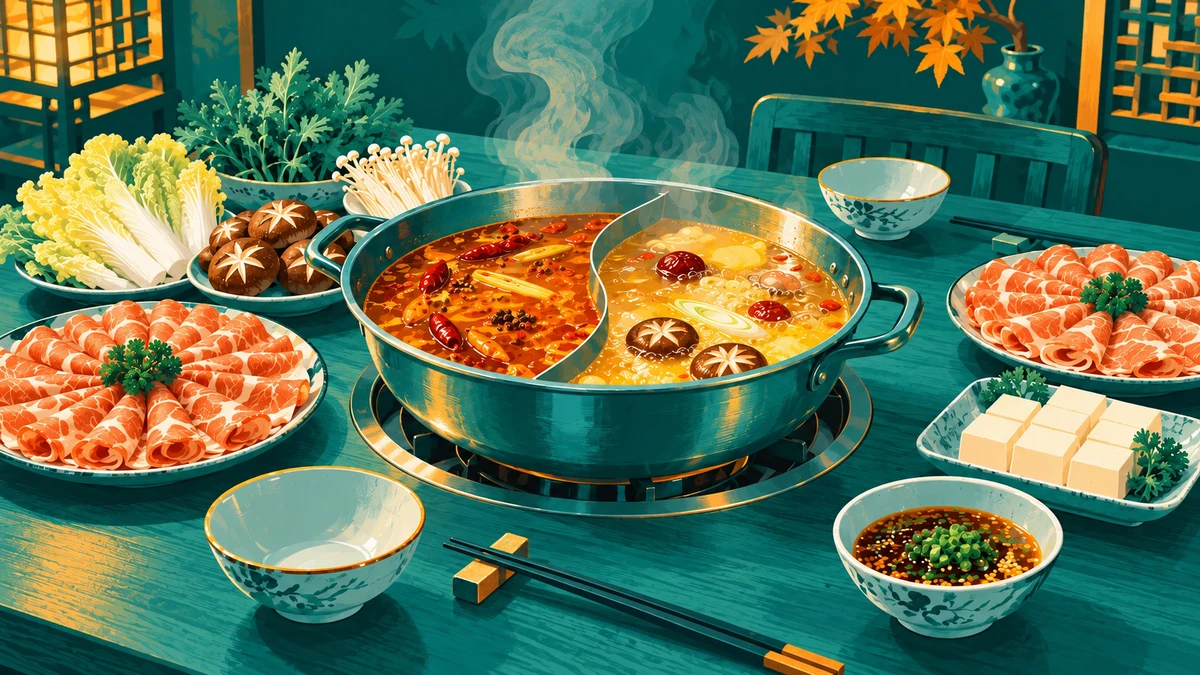
Hot Pot in Chinese: Broths, Ingredients & Words for the Table
Learn how to order hot pot in Chinese, choose a broth and spice level, name ingredients and sauces, and practise with an illustrated interactive menu.