
Halloween Vocabulary in Chinese: A Night in Taipei
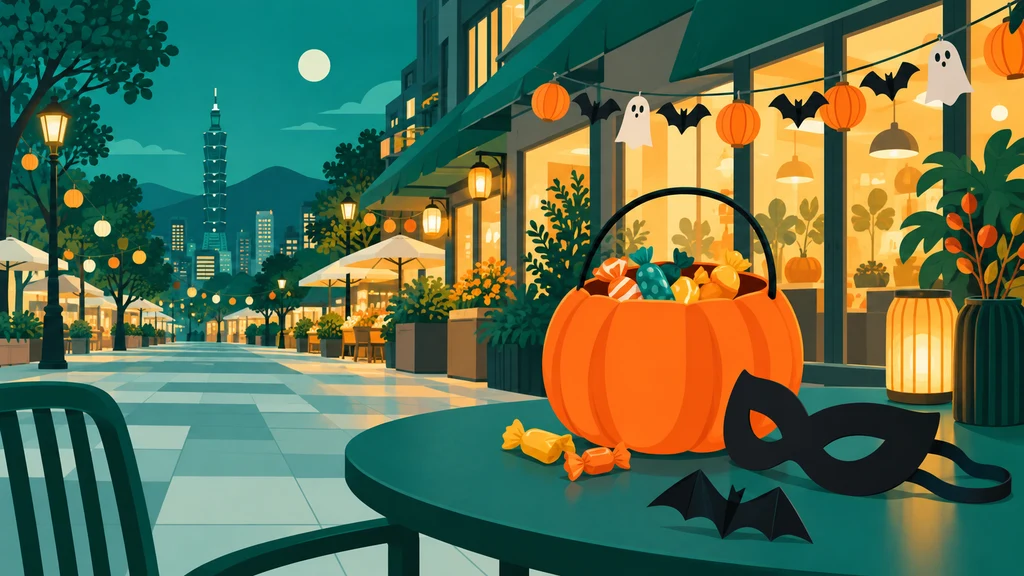
A pumpkin bucket swings from someone’s hand. A witch hat brushes past a shop window. Down the street, a group stops to admire a costume that looks suspiciously like an exhausted office worker. Taipei has room for the cute, the creepy, and the wonderfully specific on Halloween night. If you’re learning Mandarin, it also gives you a much better place to meet new words than a list of twenty unrelated monsters.
This guide to Halloween vocabulary in Chinese follows the things you might actually notice and say: the decorations, the costumes, the candy route, the parade, and the inevitable request for a group photo. Each vocabulary card shows simplified Chinese on the first row and traditional Chinese on the second, with one pinyin line for how the word sounds. That matters here because event posters in Taiwan use traditional characters, while many learners start with simplified ones.
How do you say Halloween in Chinese?
The holiday’s everyday Mandarin name is wànshèngjié. The final character, jié, marks a festival or holiday; the first two refer to the saints in the name. In ordinary conversation, you can pair the holiday name with kuàilè to wish someone a happy Halloween. It is a friendly line to say to a classmate in costume or a shopkeeper handing out sweets.
The most recognizable Halloween call is bù gěi táng jiù dǎodàn, the Chinese version of “trick or treat.” You may hear it on a children’s candy route or see it printed on an event poster. In Taiwan, organized routes through participating shops are a concrete place for that phrase. Do not assume that any random apartment door is part of the game: follow the event’s marked shops or the route provided by its organizer.

That second card, “Your costume is so cool,” is likely to get more use from an adult than the candy slogan. It works when a stranger’s elaborate outfit catches your eye, and it starts a real conversation. You can point, smile, and let the phrase do its job without first explaining the entire concept of Halloween in Mandarin.
The things you see before the party starts
You rarely need to say every Halloween creature in one evening. You do need names for what is right in front of you: a pumpkin on a counter, a candy bucket, a mask, or decorations strung across a window. These are the words that make a street scene readable.
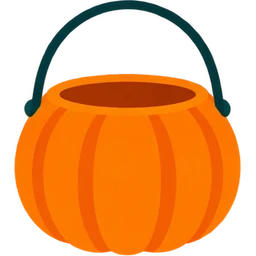

Notice the small difference between a pumpkin and a pumpkin lantern. The plain vegetable is nánguā; add dēng, “lamp,” and you have the illuminated Halloween decoration. A nánguātǒng is something else again: the bucket a child carries to collect candy. That last compound is easy to remember when you are watching someone lift the handle of an orange plastic pumpkin.
The words for mask and decorations travel beyond October. A mask might be part of a performance or a party next month. Decorations turn up at New Year, a birthday, or a shop opening. The festival gives you a vivid first encounter, but it does not have to be the only time you use the vocabulary. In fact, that is a good reason to learn the ordinary nouns before memorizing the names of every movie monster.
In Taipei, the scene can also include a guǐwū, a haunted-house attraction. The word joins “ghost” and “house,” so its meaning is unusually transparent once you know the two parts. It is more useful on an event map than a long English explanation of a scary attraction would be.
Costumes you can actually talk about
The best costume question is not “What is the Chinese word for a vampire?” It is “What are you going as?” Once a friend answers, the monster words suddenly have a purpose. Mandarin has several useful ways to talk about dressing up. Biànzhuāng is the act of transforming your look; zhuāngbàn can name the look itself or the act of putting it together. To say “dress up as a vampire,” the verb bànchéng in the interactive walk below gives you a flexible sentence frame.
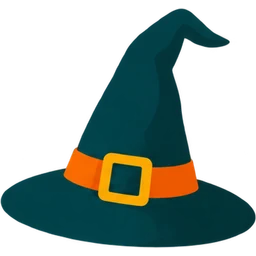
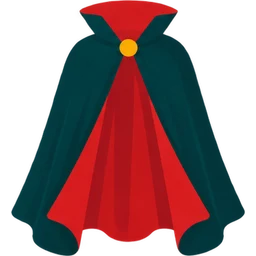

Some costumes are immediately recognizable anywhere: a witch’s pointed hat, a vampire’s cape, a skeleton’s painted face. Others are local jokes or a very precise observation about everyday life. That is part of the fun of walking through Taipei’s Halloween crowds. In Xinyi in 2025, local coverage described people dressed as familiar fictional characters alongside playful impersonations of ordinary people. You do not need a special word for every reference to enjoy the joke. Ask what someone is dressed as, then listen to the answer.
One small language warning helps here. Guǐ is a broad word for a ghost or spirit. It appears inside “haunted house” and “vampire,” but those compounds do not all describe the same creature. A vocabulary list can make them look like neat English categories. At a party, the costume in front of you is the better clue. If you are unsure, a curious question sounds better than confidently naming someone’s carefully made vampire outfit a ghost.
How Halloween is celebrated in Taiwan
Taipei does not celebrate Halloween in just one way. In Tianmu, the annual shopping-district festival has a family rhythm: children in costume, candy from participating stores, a parade, a market, and the small negotiations that come with carrying a pumpkin bucket that is becoming heavy. The district’s event has drawn large crowds over the years. The 2026 organizer’s plan, checked in late September, lists a candy-and-costume parade on October 23 and the main park fair and participating-shop candy route on October 24. As with any outdoor event, check the organizer’s latest announcement before you travel; weather changed the dates in a previous year.
In Xinyi, Halloween has a later, more adult energy. Costumed groups fill the shopping and nightlife streets, stop for pictures, and head to parties. The outfits are not limited to horror: pop-culture characters and dry jokes about everyday life can draw as much attention as a classic monster. This is why a learner needs more than “pumpkin” and “ghost.” Words for taking photos, asking about a parade, or admiring somebody’s look are the ones that keep a conversation moving.
The celebration reaches beyond central Taipei too. Taiwan has school activities, local business-district events, and larger city festivals in other places. What you encounter depends on where you go and which shops are participating. The useful question is not whether every household celebrates. It is what this particular street, school, or venue has organized, and which Mandarin words will help you take part.



Three of those words make a useful map of an evening. Shāngquān is the commercial district, the area in which several businesses organize a shared event. A shìjí is the market you may find inside it. Yóuxíng is the parade passing through or gathering nearby. If an announcement uses all three, you already know the shape of the event before you know its exact timetable. If you have read our Chinese vocabulary for a market visit, the food and shopping words from that article will make the stalls easier to navigate too.
Five Mandarin lines for a night in Taipei
The next exercise turns the vocabulary into small decisions. Picture yourself walking from the decorations to a costume shop, then on to a candy route and parade. At each stop, try to say something before you open the answer. The sentence does not need to be perfect on the first attempt. Its job is to connect a situation with words you can retrieve while the situation is still happening.
Five moments. Five things to say.
Follow the street from the first decorations to the group photo. Open each stop to see both ways of writing the line.
01 At the decorations
You spot the orange lanterns as the shops light up.
Happy Halloween!
02 At the costume shop
A friend is still deciding what to wear.
What are you dressing up as?
03 At the candy route
You want to find the participating stores.
Where can we go trick-or-treating?
04 Before the parade
You hear music and see people gathering.
What time does the parade start?
05 For the group photo
Everyone is finally in the same frame.
Could you take a photo of us?
Try saying the line before opening the next stop. The setting gives the words a reason to appear.
The costume question is especially flexible. Change the last word to ask what someone is dressing up as, or use the same frame to say what you plan to wear. The photo request travels even further. You can use it at a birthday party, on a hike, or outside a restaurant. Halloween supplies the memorable scene, but the Mandarin stays with you after the decorations come down.
For the candy route, the short verb tǎotáng is worth remembering. It tells you what the children are doing at participating shops. The longer “trick or treat” slogan is fun to recognize, but it is not a substitute for understanding an event notice that tells families where and when candy is being handed out. If you find a poster with unfamiliar words, the Merry Mandarin Chinese Reader lets you paste the line and tap a word to look it up without losing the surrounding sentence.
Read a Halloween event poster word by wordPaste a Mandarin announcement into the free Chinese Reader and tap any word you want to check.
Try it yourselfHalloween and Taiwan’s other ghost season
Halloween’s pumpkins, costumes, and candy routes can make a visitor think of another season associated with ghosts in Taiwan. Ghost Month is a separate tradition. It follows the lunar calendar, usually falling in late summer, and its observances include temple and community rituals rather than Halloween costume games. Keelung’s long-running Ghost Festival is one well-known example. The two occasions can both give you a reason to learn the word for “ghost,” but their meanings, timing, and activities are different.
That distinction also keeps this article’s vocabulary honest. The words above describe the modern October celebrations you might actually see in a Taipei shopping district. They are not a glossary for religious observances, and they do not claim to explain every way people in Taiwan relate to spirits or ancestors.
If you want to remember this vocabulary, keep one scene rather than trying to memorize all twenty-four cards tonight. Imagine seeing a pumpkin bucket, asking a friend about a costume, then stopping to watch the parade. Say the three corresponding lines once without looking. Tomorrow, change one detail. That is the same small, situation-first route we use in our guide to thinking in Chinese: a real cue, a phrase you can retrieve, and a quick check when you get stuck. By next Halloween, you will have more than a list of words. You will have something to say when the street fills up.
Related reading
Mid-Autumn Festival in Chinese: Greetings, Mooncakes, and What They Really Mean
What to actually say for Mid-Autumn Festival: the right greeting for the moment, the mooncake vocabulary you'll need, and the honest story behind the holiday's reunion imagery.

Traditional or Simplified? It's Not the Question You Think
Traditional or Simplified Chinese? The real answer isn't which is better, it's where you'll use it. A clear decision guide for new learners.